
Carbonyldiimidazole
Carbonyldiimidazole (CDI) is a white crystalline organic reagent used in synthesis to activate carboxylic acids, forming reactive intermediates for making amides, esters, and ureas, acting as a safer alternative to toxic phosgene. It's known for peptide coupling, protein modification, and pharmaceutical synthesis, enabling clean reactions by releasing imidazole as a byproduct.
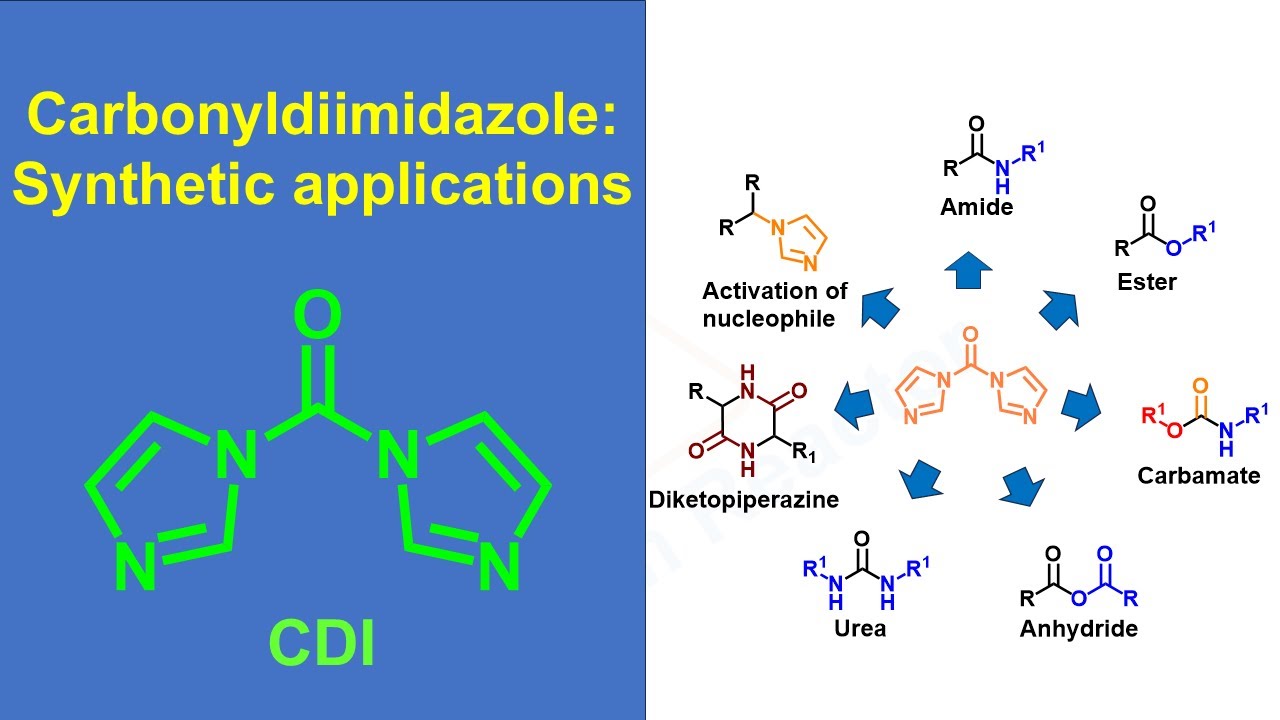
Introduction to CDI
- 1,1'-Carbonyldiimidazole (CDI) is a versatile reagent in organic synthesis.
- White crystalline solid, soluble in organic solvents
- Functions as an activating and coupling agent
- Produces imidazole as a benign byproduct
Peptide & Amide Bond Formation
- Activates carboxylic acids to acyl imidazoles.
- Reacts with amines to form amide bonds.
- Widely used in peptide synthesis.
Drug Development & Bioconjugation
- Prodrug synthesis (ester & carbamate linkages)
- Enzyme immobilization on surfaces
- Applied in biosensors and protein engineering.
Advantages of CDI
- Mild, efficient, and versatile reagent
- Produces imidazole as easy-to-remove byproduct.
- Safer and more stable compared to DCC.
- Wide applications in pharma, polymers, and biotech.
Urea & Carbamate Formation
- CDI + amines ¡æ Ureas
- CDI + alcohols/amines ¡æ Carbamates
- Important in drug intermediates & agrochemicals
Nucleoside & Phosphate Applications
- Used in nucleotide & nucleoside synthesis
- Facilitates phosphorylation
- Prepares activated phosphate esters
Polymer & Material Applications
- Converts diols into carbonates
- Used for polymer crosslinking
- Enables surface functionalization for biomolecule immobilization